What is concrete polishing, and on which floors does it work?
Concrete polishing is not a coating; it is a surface achieved by the gradual abrasion of the concrete's own surface. Which concrete yields results and which does not — what you need to know before deciding.
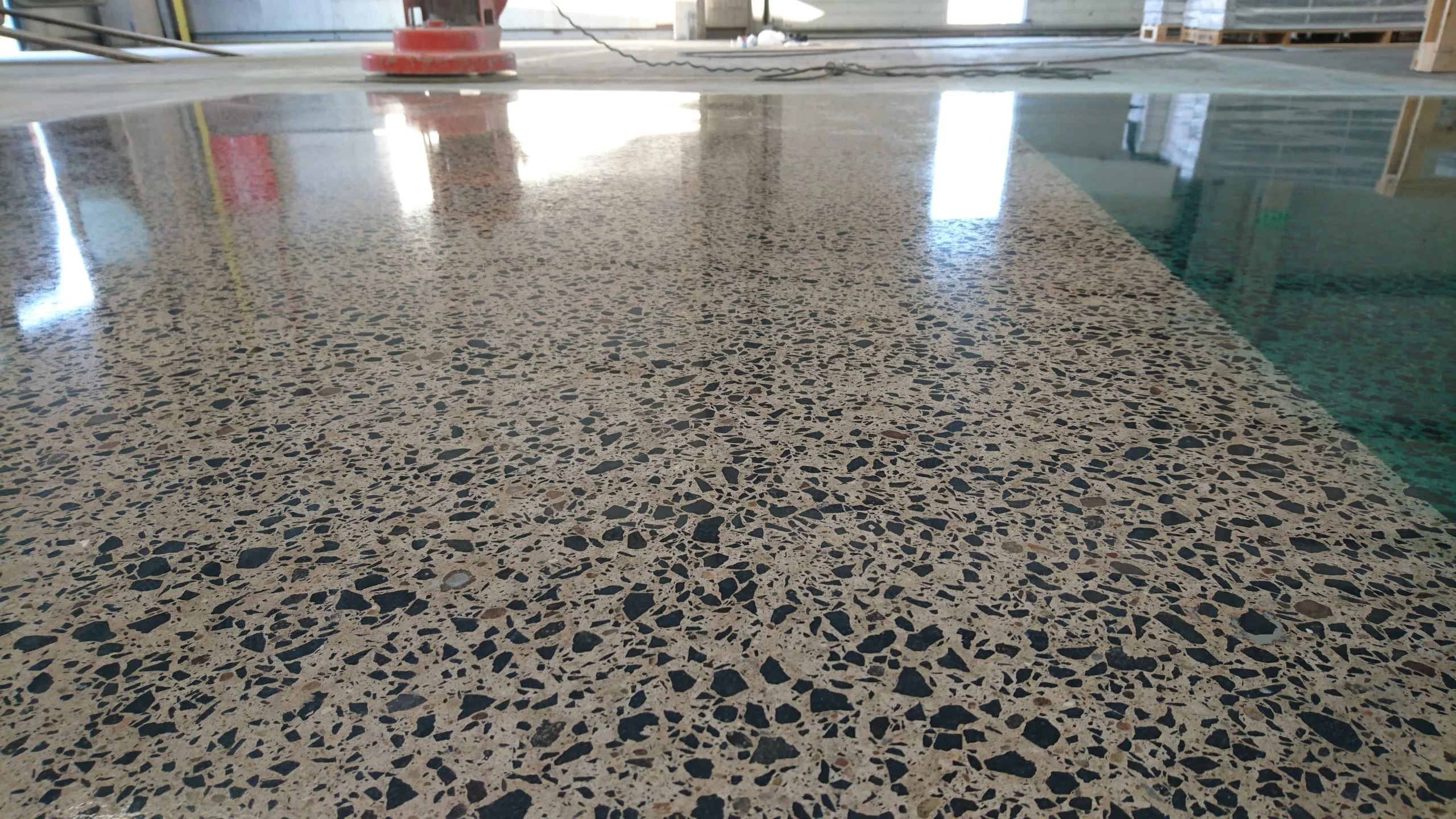
Concrete polishing is not about applying a coating to the floor. The concrete's own surface is opened and closed step-by-step using increasingly finer abrasives; the shine comes from the surface itself. Therefore, what determines the result is not the product applied, but the existing concrete itself.
On which concrete can results be achieved?
Polishing requires concrete that is sufficiently hard and sound. Three things are considered when making a decision:
- Surface hardness. Soft concrete crumbles under the abrasive; it does not hold a shine and becomes dull in a short time.
- Surface integrity. If there is blistering, dusting, or a loose screed layer, polishing will remove that layer — the condition of the underlying layer becomes the deciding factor.
- Aggregate distribution. The deeper you go, the more aggregate is exposed. The desired look determines the depth to be reached.
Three distinct looks, three distinct depths
"Polishing" is not a single result. Depending on how many mm you go down on the same floor, completely different surfaces emerge:
- Cream / cement surface: Almost no depth is removed. Aggregate is not visible; it results in a flat and calm surface.
- Salt-and-pepper: 1–2 mm is removed. Fine aggregate appears as dots.
- Full aggregate: 3–5 mm is removed. Large grains are visible in their entirety; this is the closest to a terrazzo look.
There is no turning back between these three: the depth reached is permanent. Therefore, creating a sample area before starting the job prevents subsequent disputes.
Where is polishing the wrong choice?
Concrete polishing is not suitable for every floor:
- In production areas where oil and chemicals are constantly spilled, open pores will stain; a coating might be more appropriate.
- In heated flooring, deep grinding can thin the cover over the pipes — a decision should not be made without seeing the project details.
- On highly cracked floors, polishing does not close the cracks; it makes them more prominent. Repair is required first.
The sequence of work
The correct sequence is: coarse opening with metal diamond tooling → intermediate steps → densifier → resin steps → protective sealer. Skipping steps does not save time; a higher step cannot remove the marks of the lower one, and the marks will remain on the surface.
Which floor grinder and which diamond tooling step to work with varies according to the floor. If you send us the square footage, current surface condition, and desired look, we can prepare the appropriate machine and consumables list together.