Terrazzo flooring: new pour and old floor restoration
Terrazzo consists of aggregate grains in a binder. The sequence of steps is crucial for new pours, while void filling is the priority for old floors.
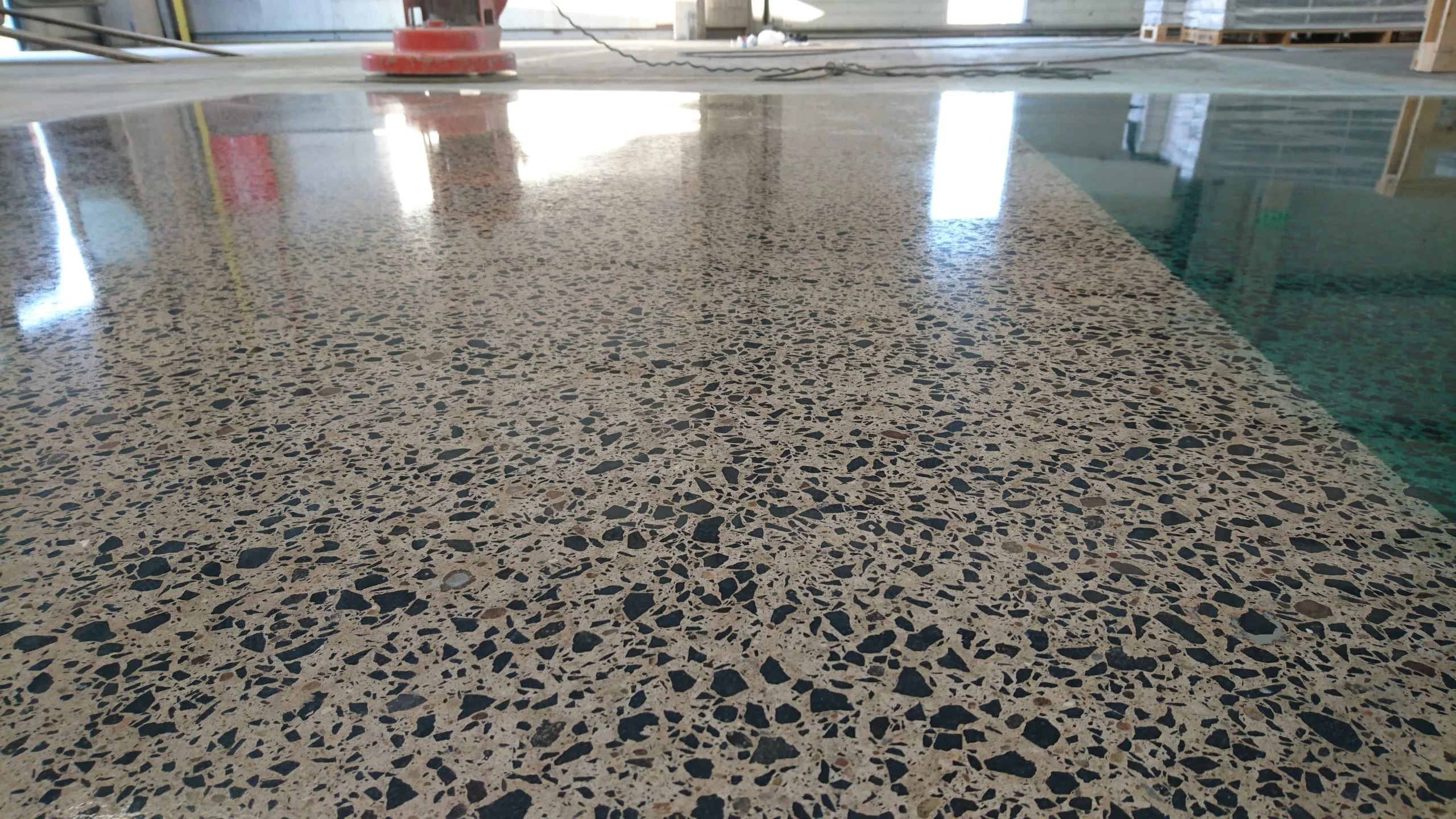
Terrazzo is a floor obtained by dispersing marble/granite grains in a binder and exposing the surface. The binder is either cement-based or epoxy-based, and this distinction determines the entire process.
Cement-based or epoxy-based?
- Cement-based: Classic terrazzo. It is porous, contains voids (pinholes), and requires filling. It is thicker and adds weight to the structure.
- Epoxy-based: Applied thinly, non-porous, and offers a wide range of color options. It is for indoor use; it is not as tolerant to UV and thermal movement as cement-based systems.
If you are working on an old floor, do not choose your grit sequence without identifying the type: the same diamond tooling behaves differently on each.
Sequence for new pours
- Coarse grinding. Use metal diamond tooling until the aggregate is visible at the desired ratio. The depth of grinding determines how "complete" the grains will look.
- Grouting. Voids on the exposed surface are filled with a binder. If this step is skipped, the voids will not close during fine grinding stages, and the floor will look stained.
- Intermediate and fine stages. Do not skip grits; each must remove the scratches of the previous one.
- Densifier and protector. Apply a densifier to the cement-based surface; then a protector for stain resistance.
Old terrazzo restoration
The main issue with aged terrazzo is not polishing, but understanding what happened to the floor:
- Is there an old wax/varnish layer on top? If so, it must be removed first; working over it will not yield results.
- Level differences and joint condition. Metal joints between terrazzo panels may be worn; the machine will bounce there.
- Missing grains and cracks. Repairs are done BEFORE polishing; otherwise, the repair will be visible on the surface.
Why is it still preferred?
Terrazzo is a renewable floor: when it wears out, it is not demolished and discarded; it is re-exposed by passing through a few grinding stages. With proper maintenance, its lifespan approaches that of the building — this is what provides a return on the initial cost in the long run.
If you are unsure whether your floor is cement or epoxy-based, contact us with photos and area details; let's determine the appropriate grit sequence and filler material together.